Process
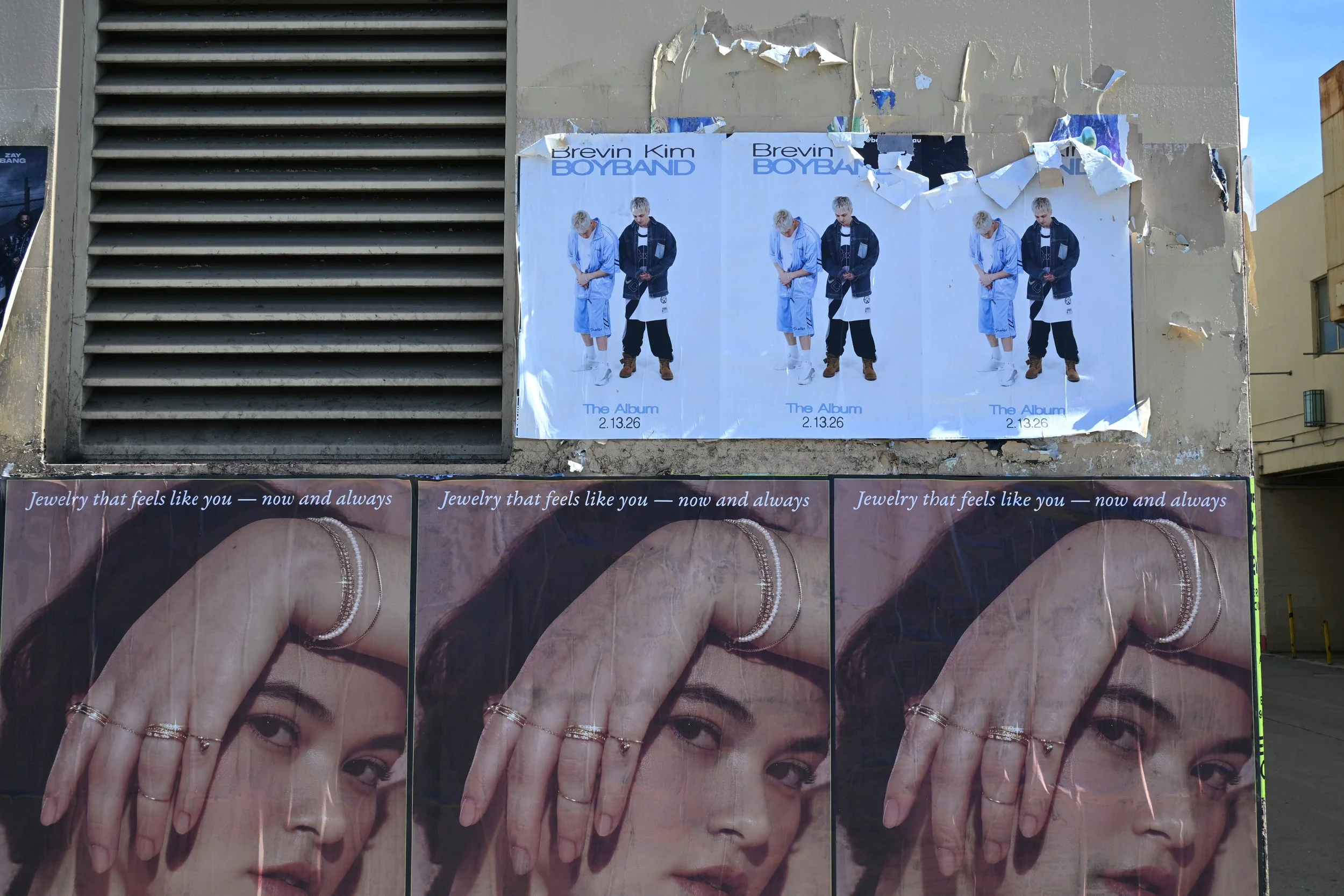
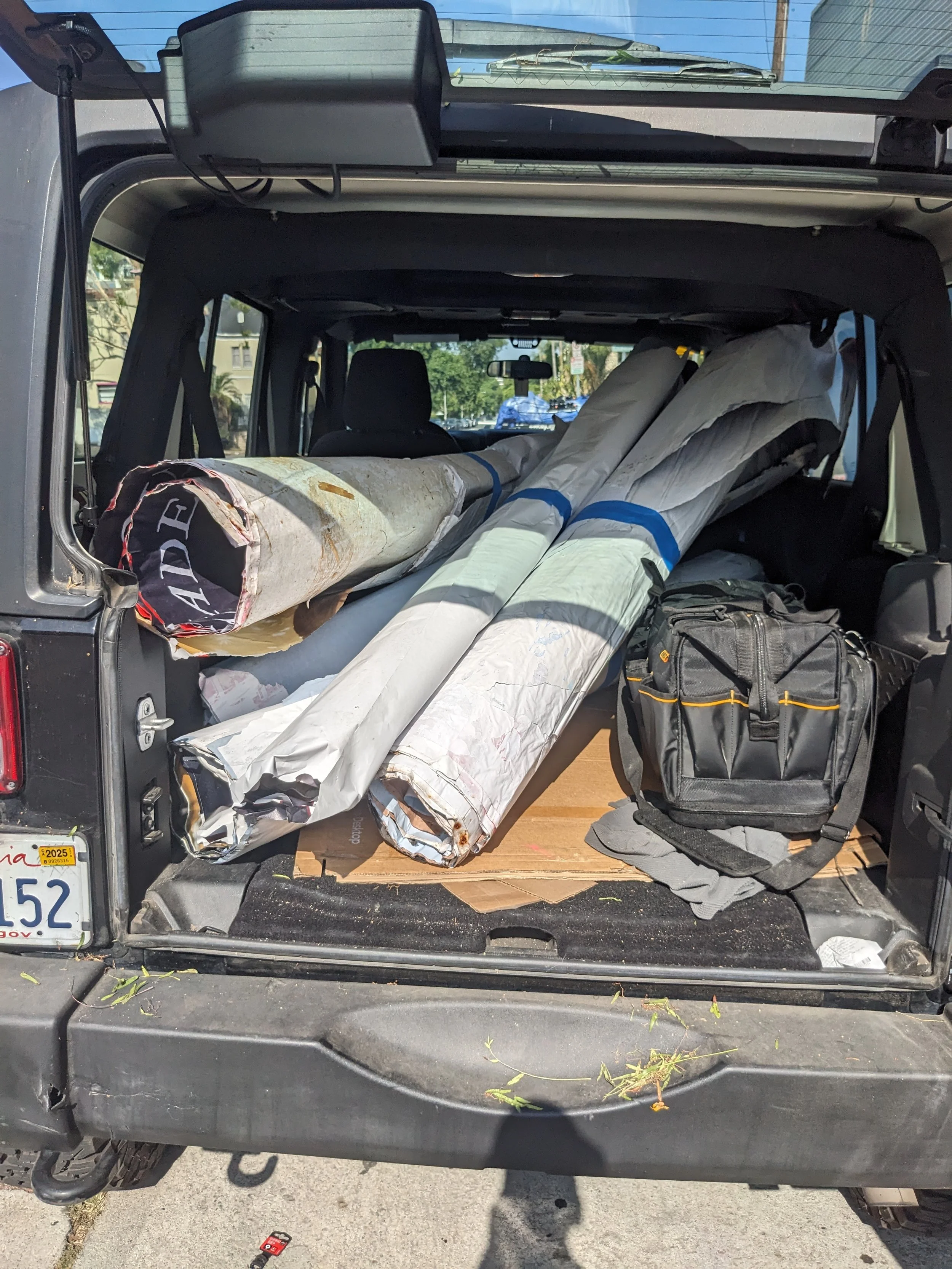
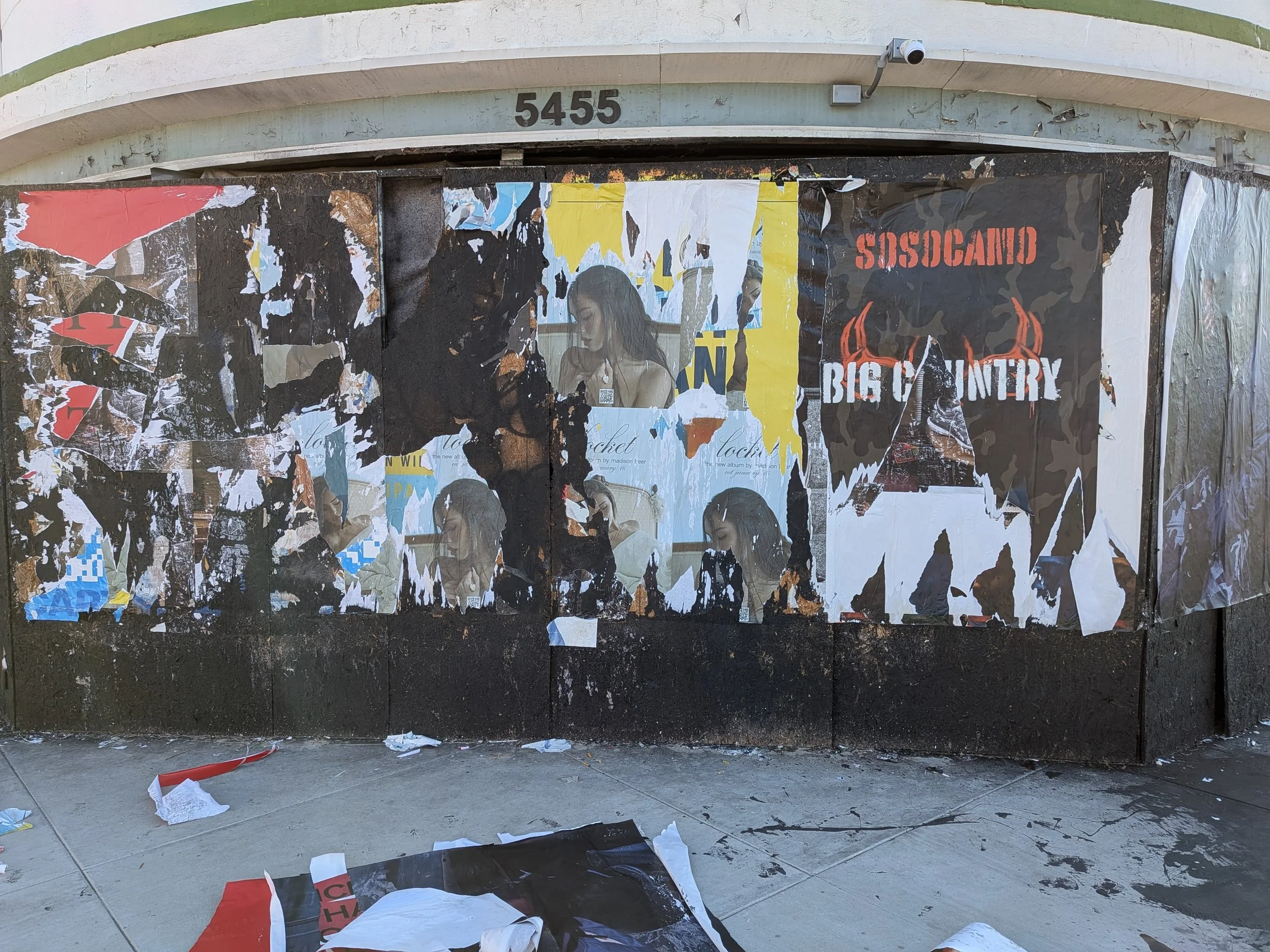
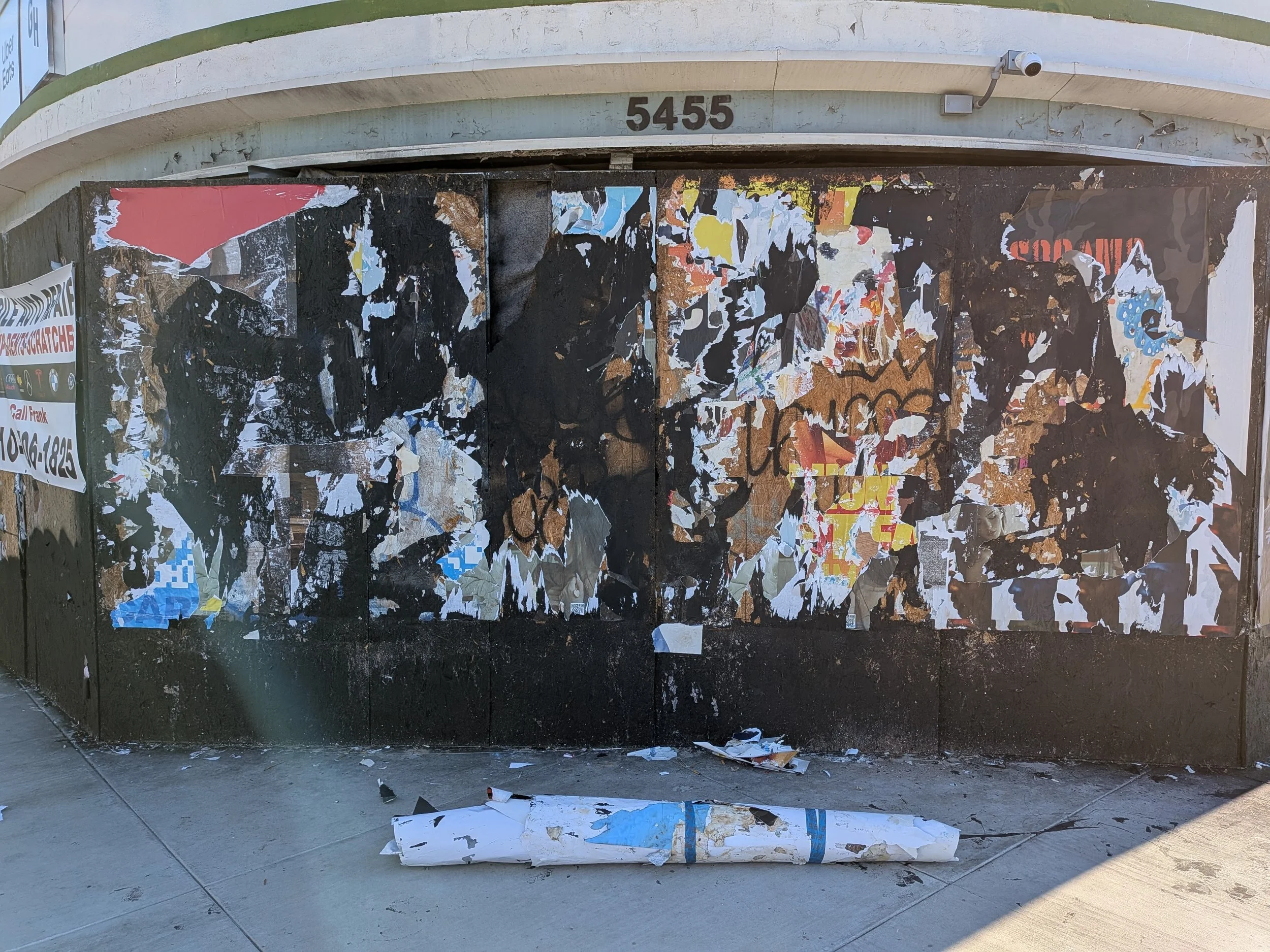
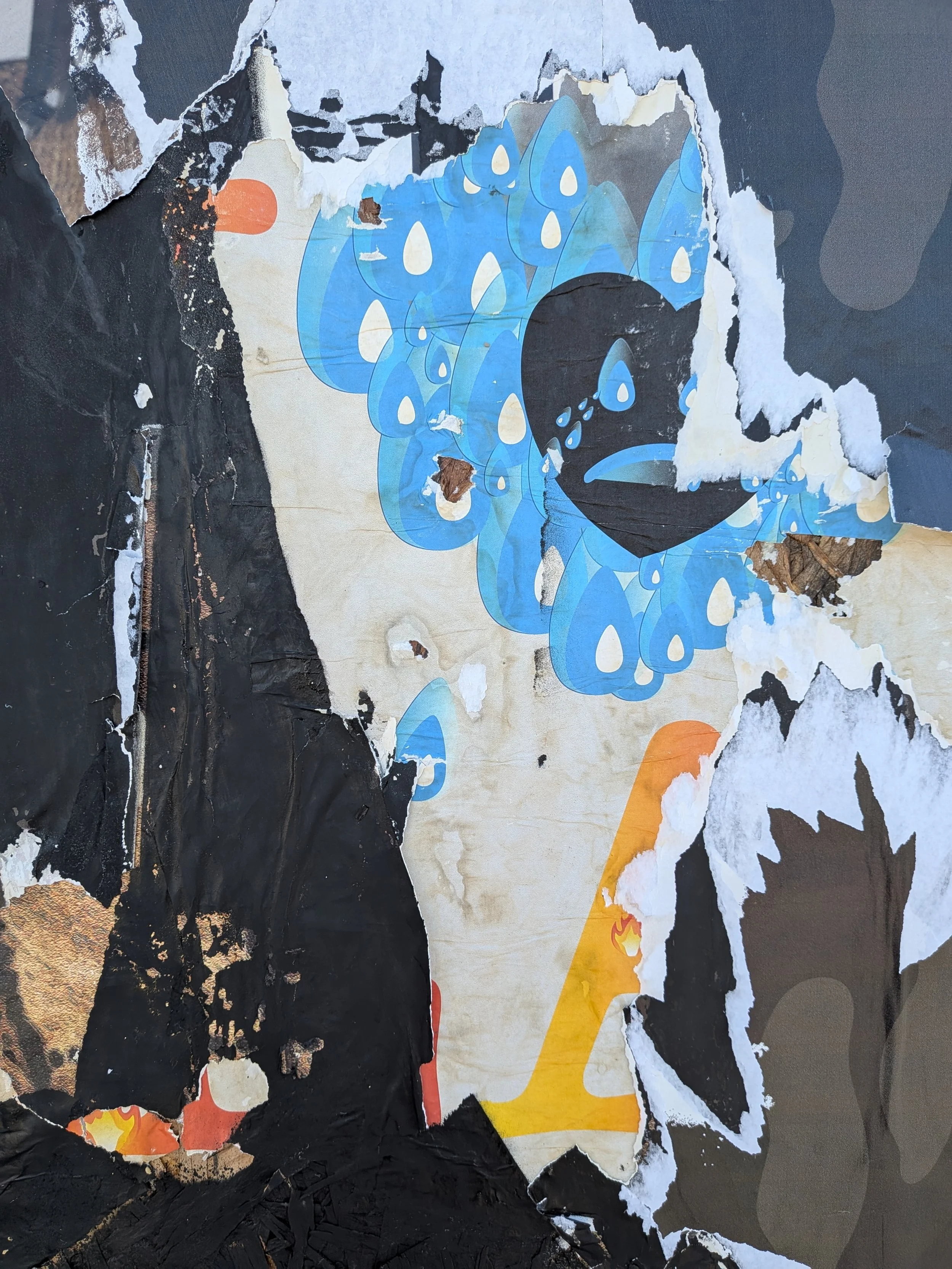
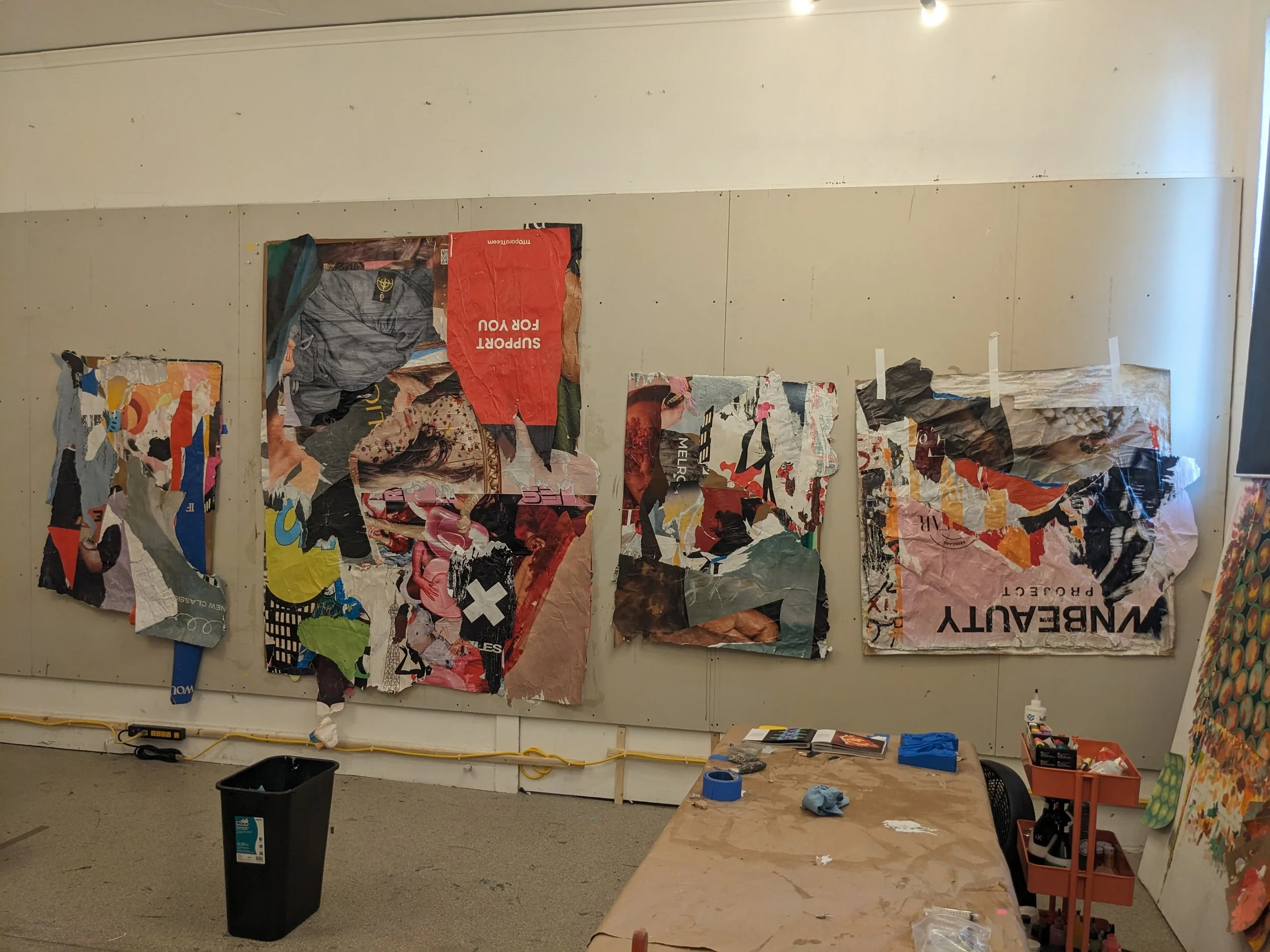
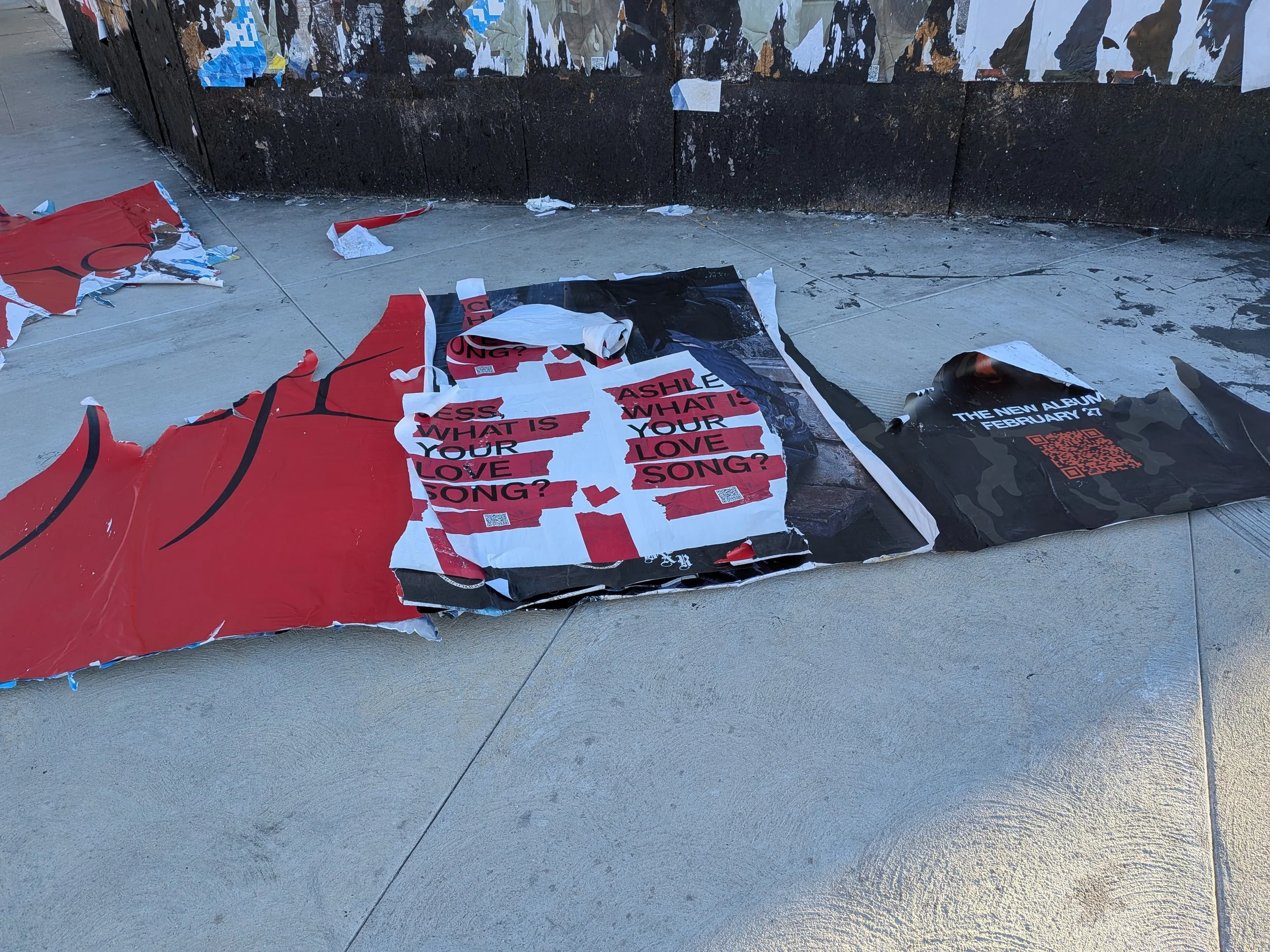
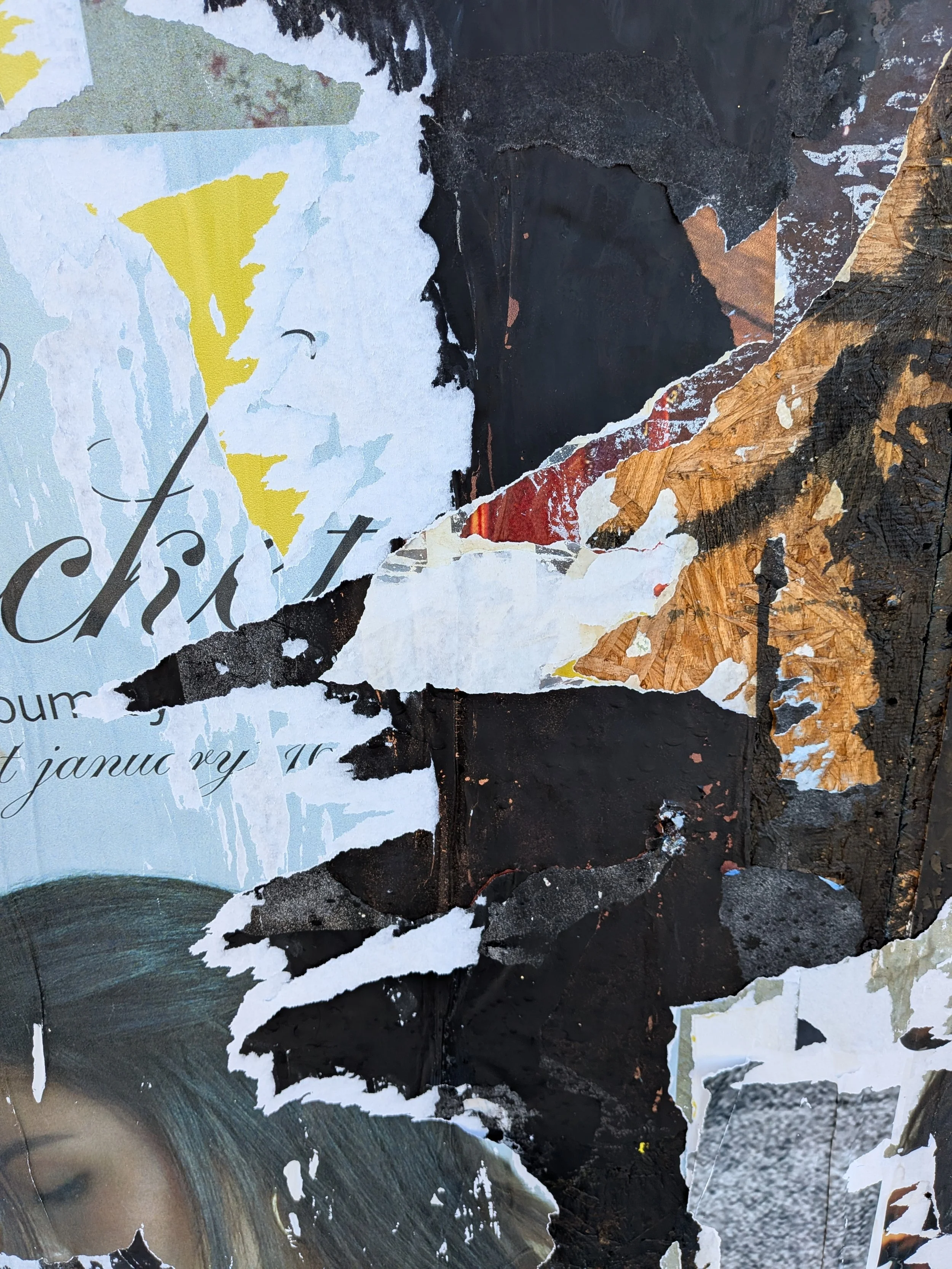
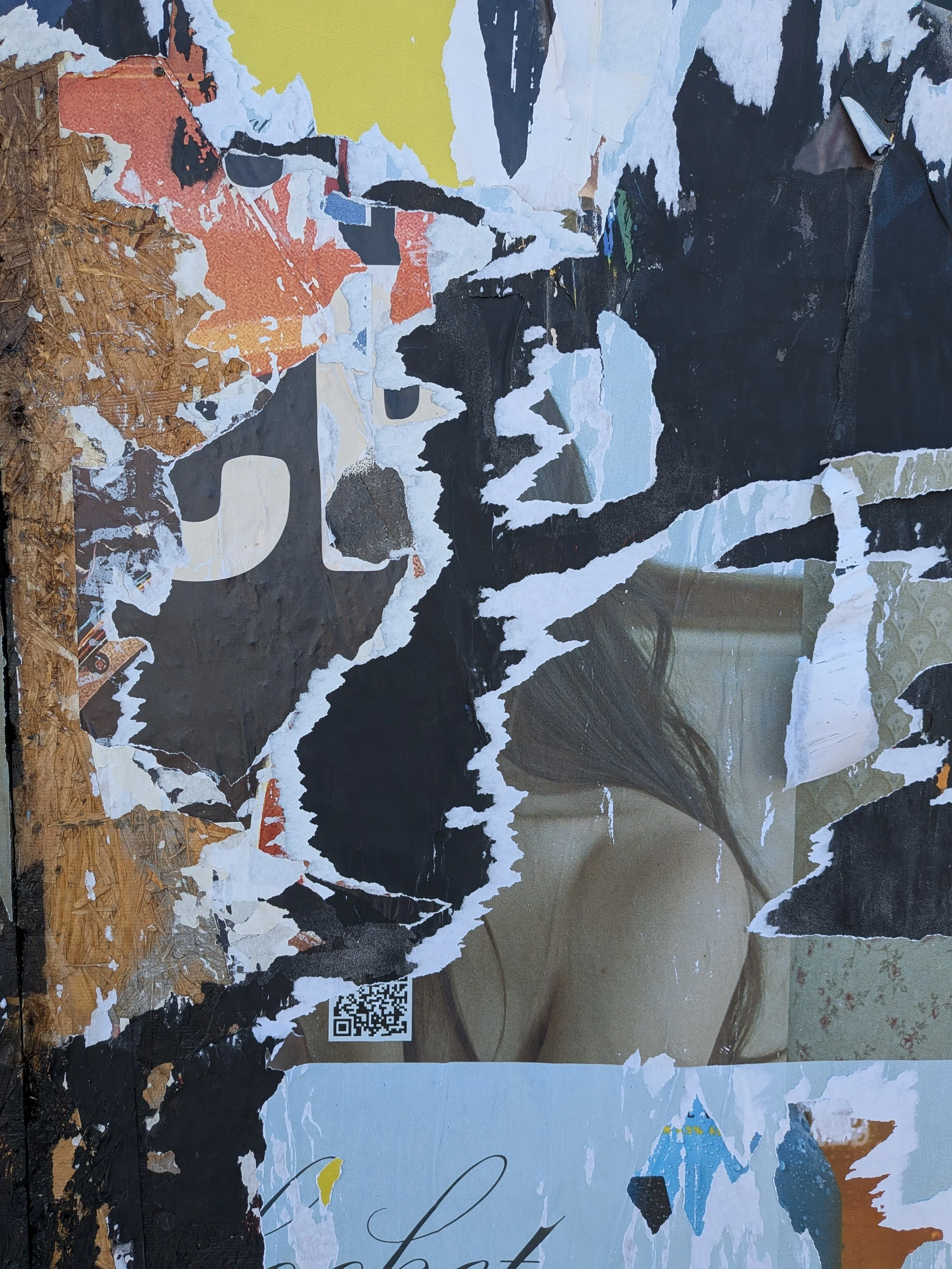
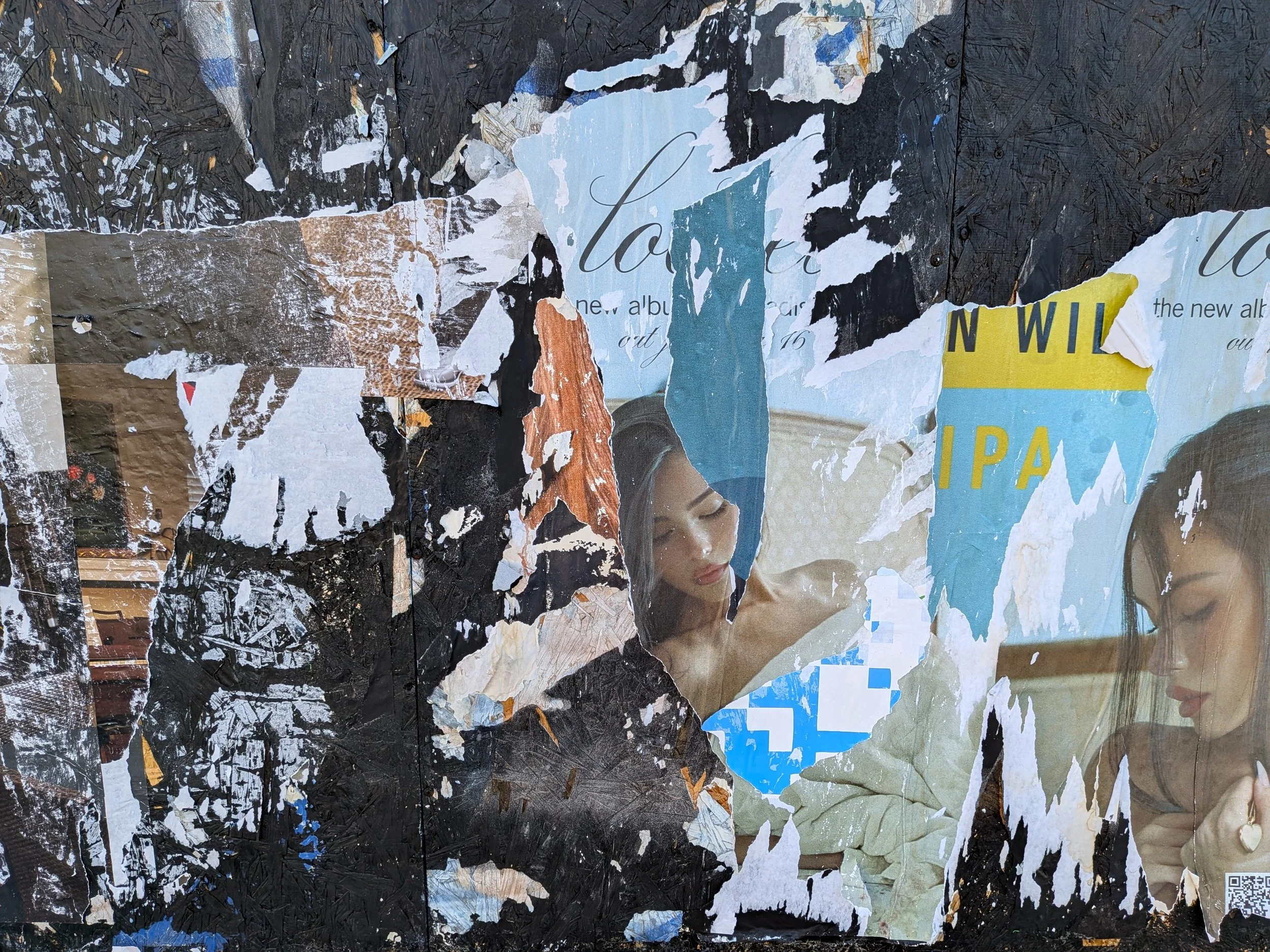
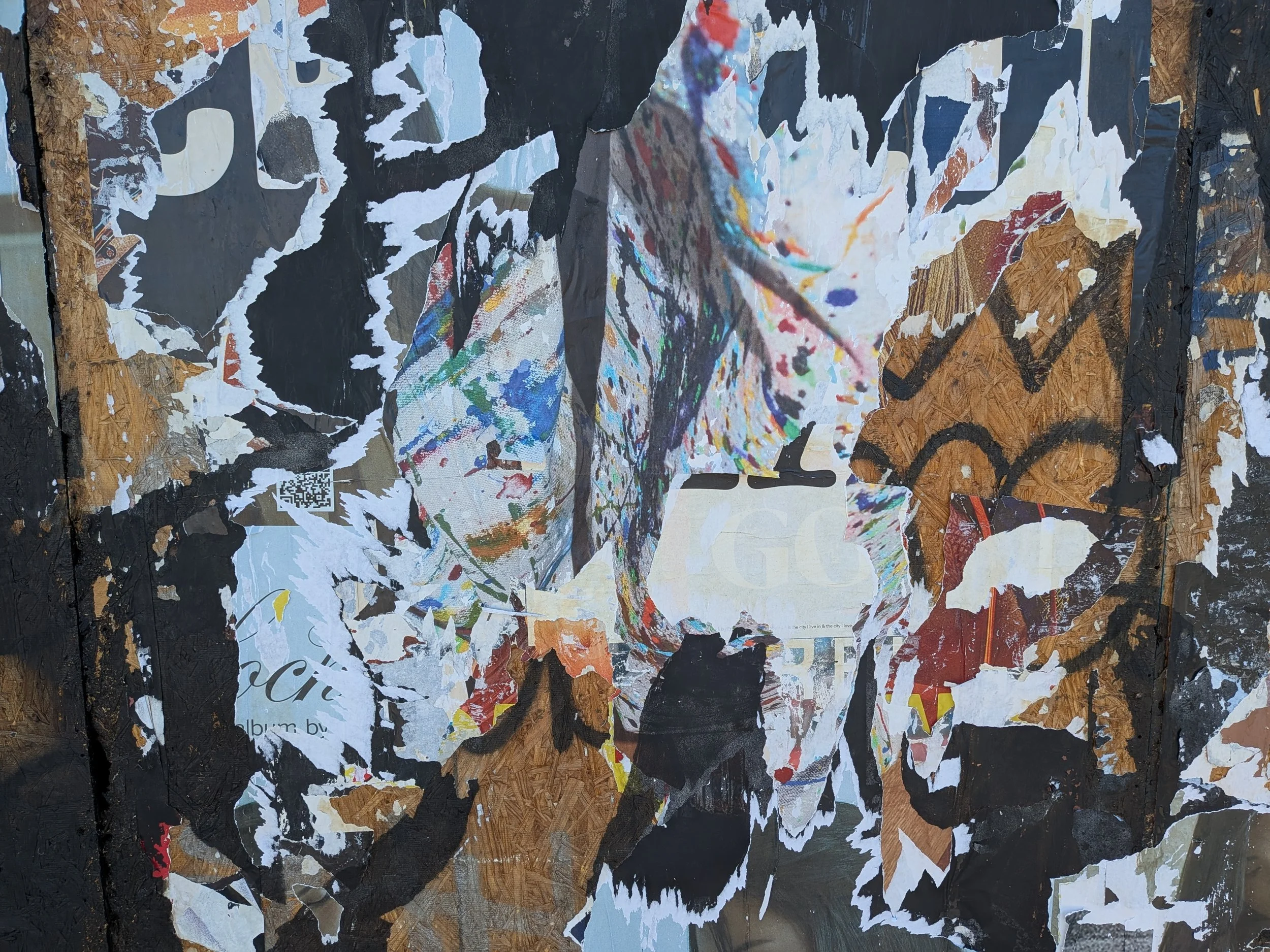
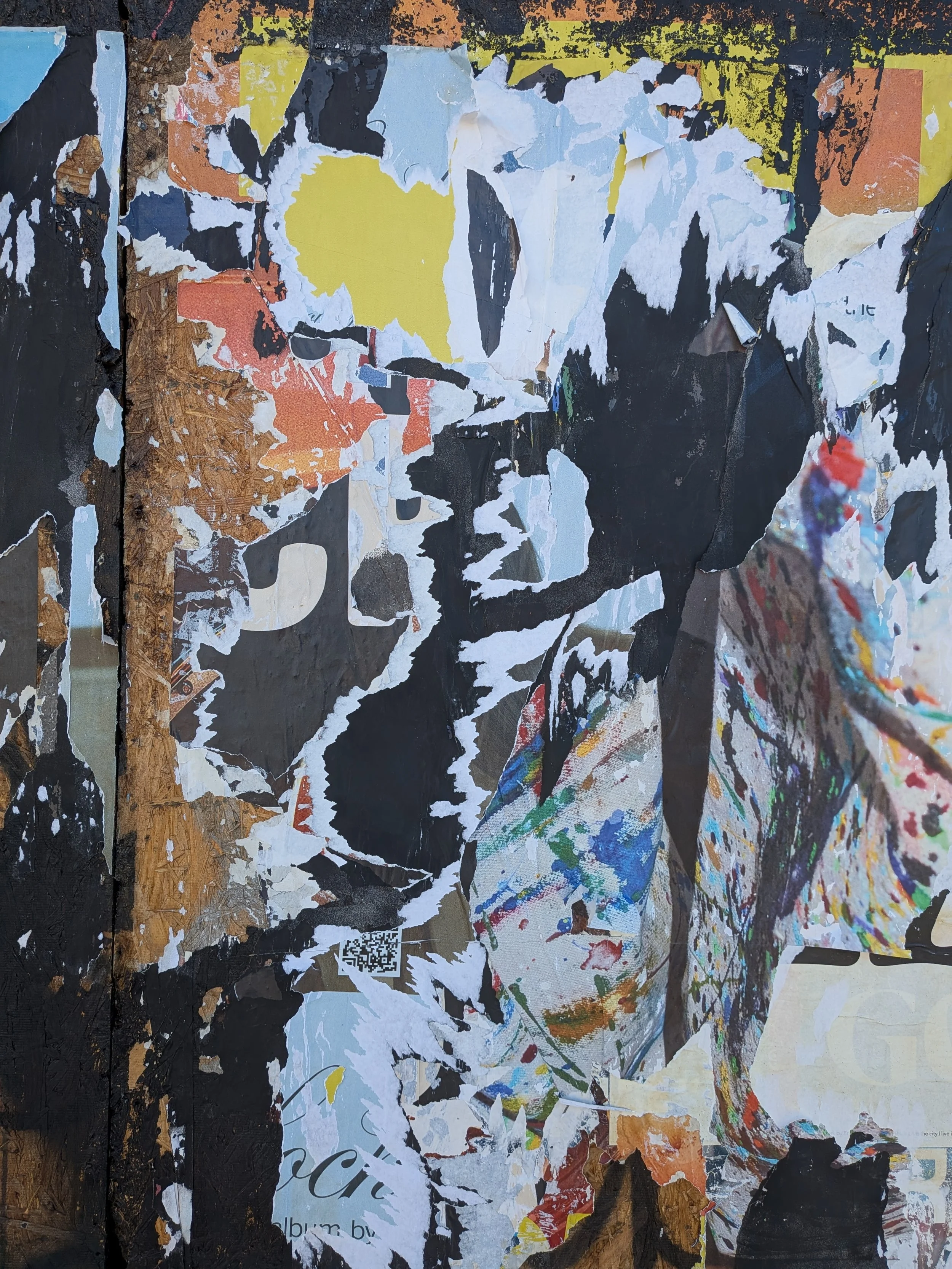
New posters go up over old ones. Layer after layer, season after season.
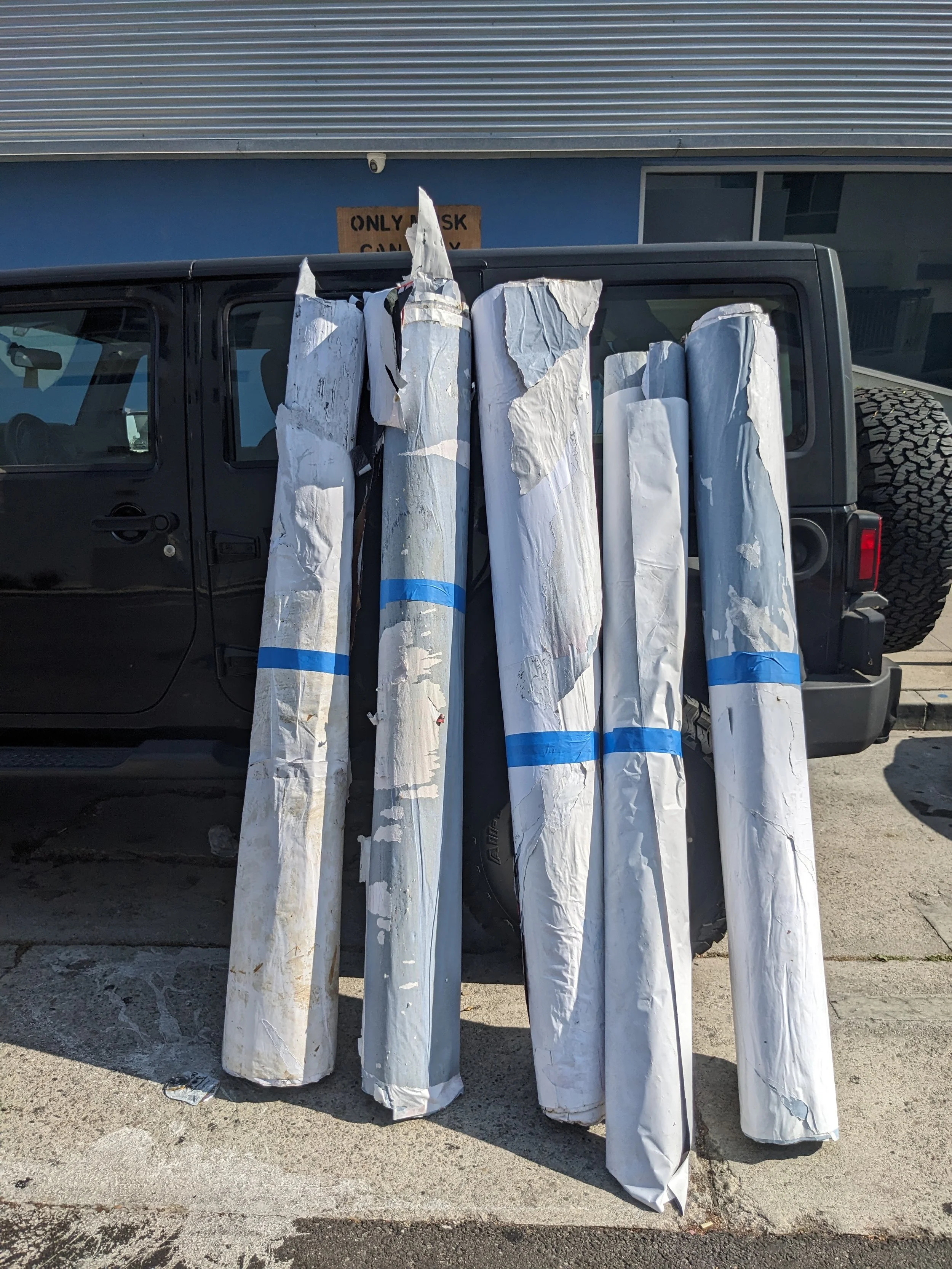
The colors shift. Winter tends toward darker, less saturated palettes, spring brings more variety, summer and fall each have their own tone. I pull what's available. Sometimes it peels off in clean sheets. Sometimes it comes apart in pieces. You take what the wall gives you.
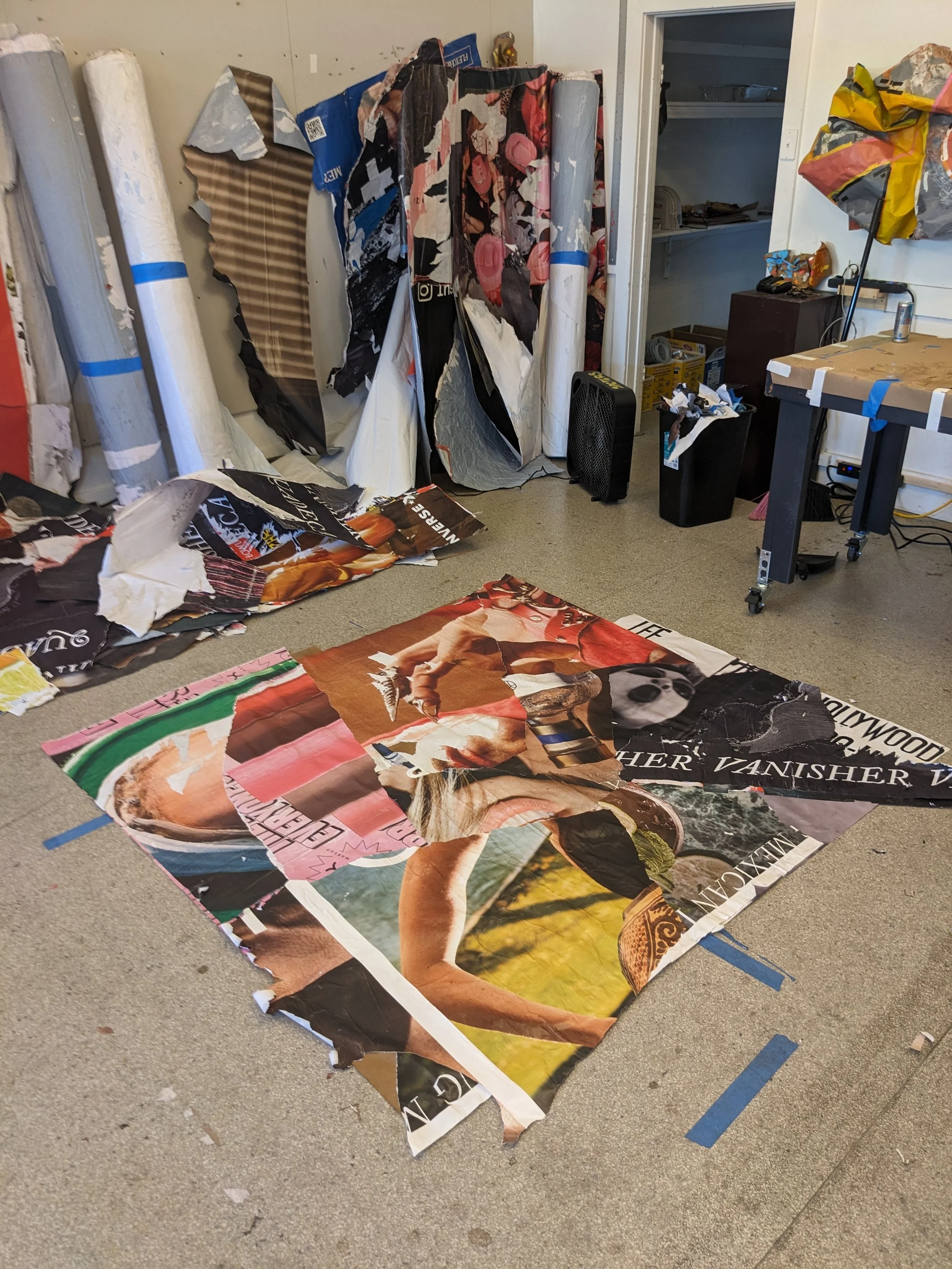
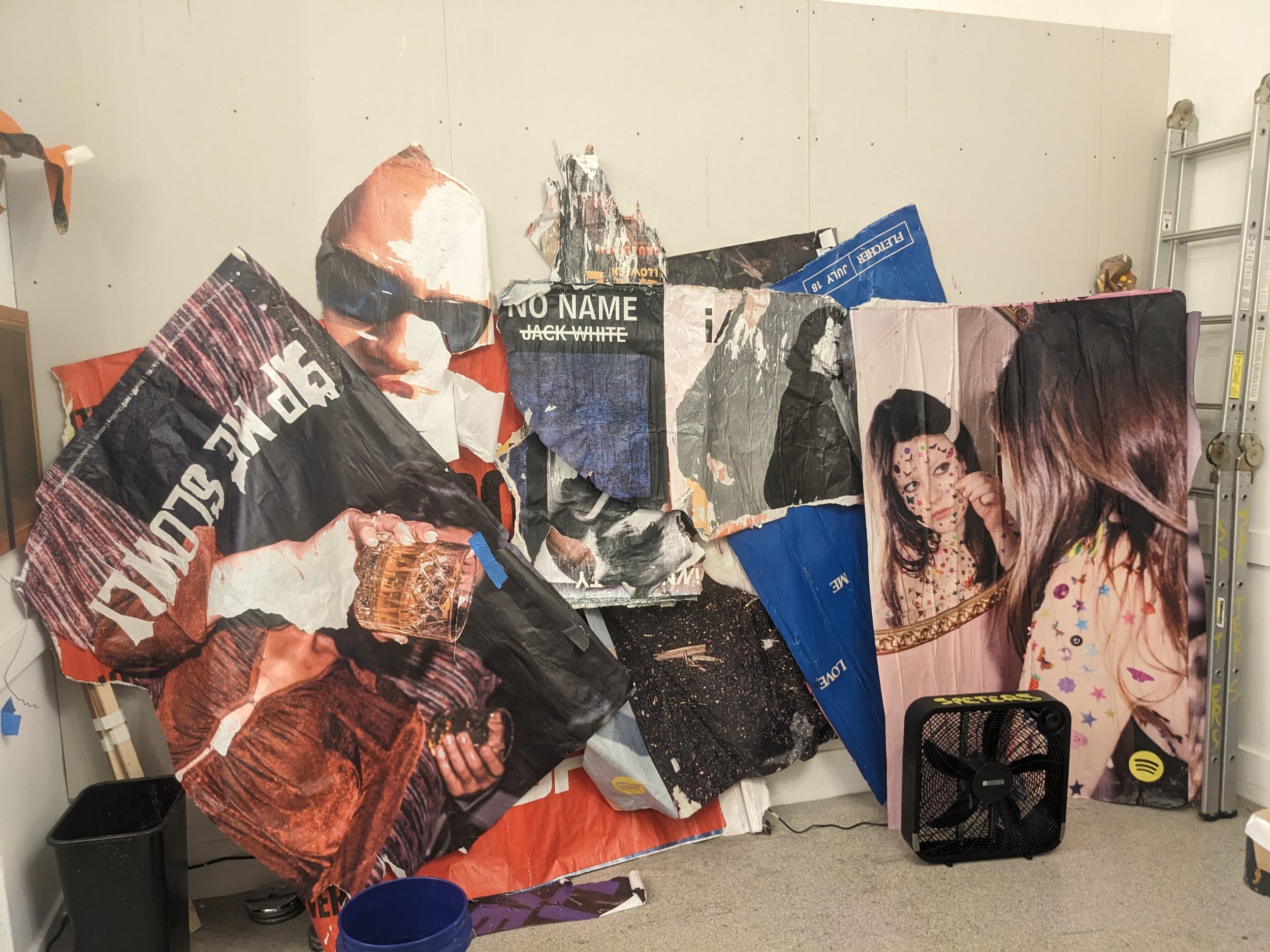
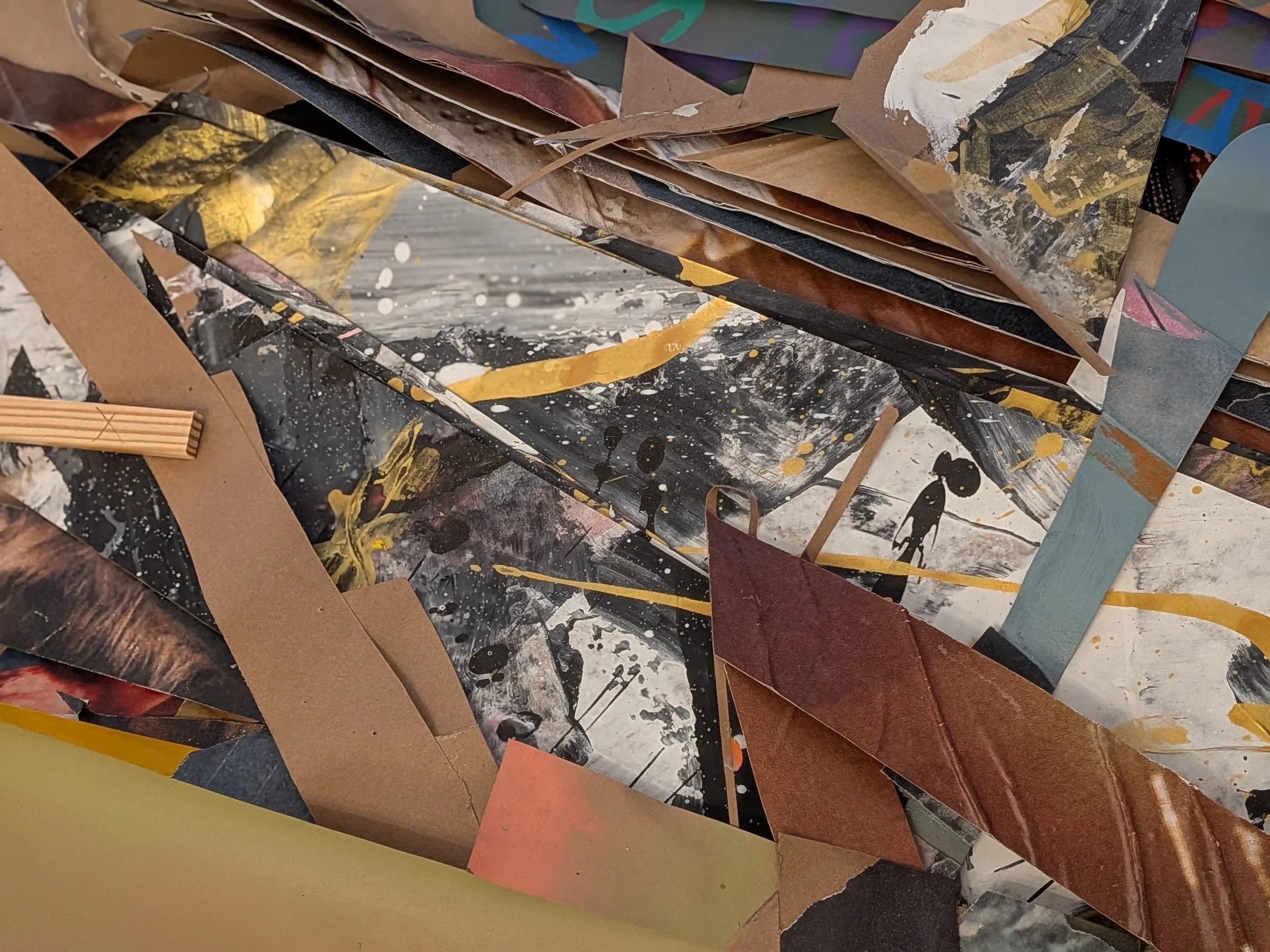
Back in the studio, everything gets spread out and looked at. Some of it is immediately interesting — a color, a texture, the way a face got torn in half. Some of it sits for weeks before I see what it wants to be part of. I'm sorting by feel more than by logic. What has presence. What has enough surface to work with. What talks to what.
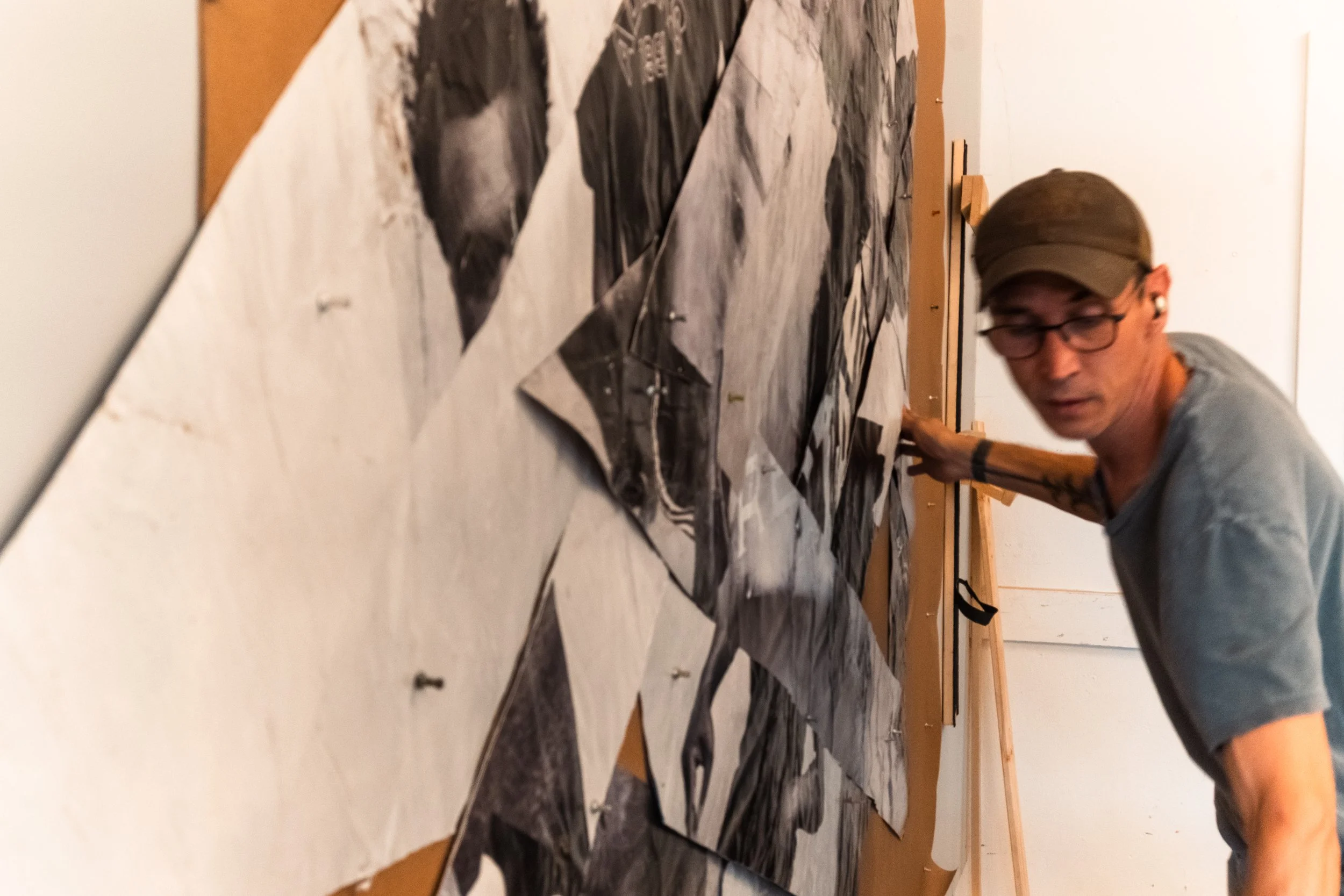
A large sheet of craft paper gets cut to set the working surface — the ground that everything else gets built on. The fragments go down without glue. This is the slowest part. I'm moving pieces around, rotating them, overlapping, pulling back, looking for the places where unrelated images start to hold together. A skin tone meets a gradient meets a torn edge. Nothing is committed yet. Everything can still move.
When the composition holds — when it stops needing to be adjusted — the pieces get glued down. This is the first point of no return. Whatever I've found is now fixed.
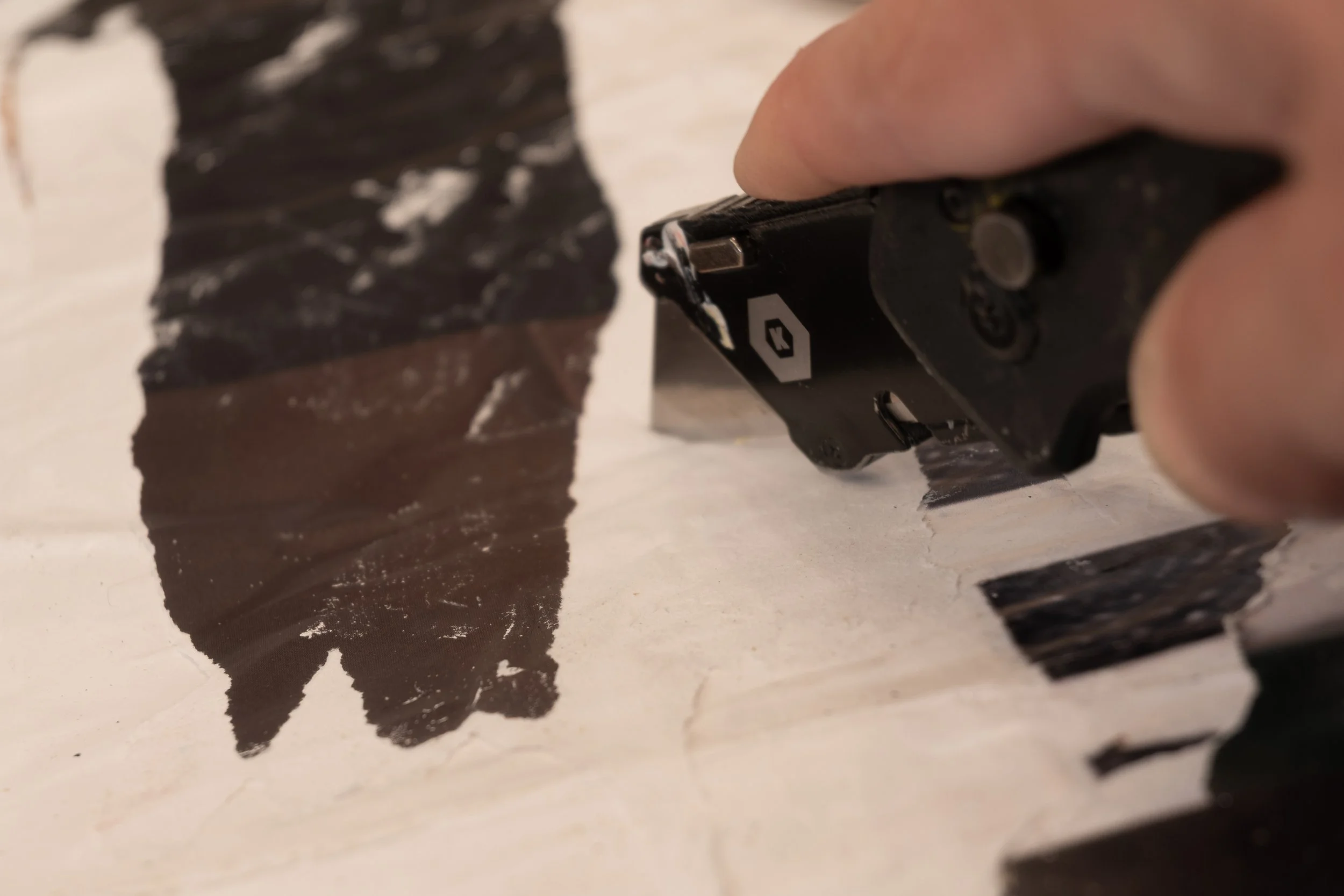
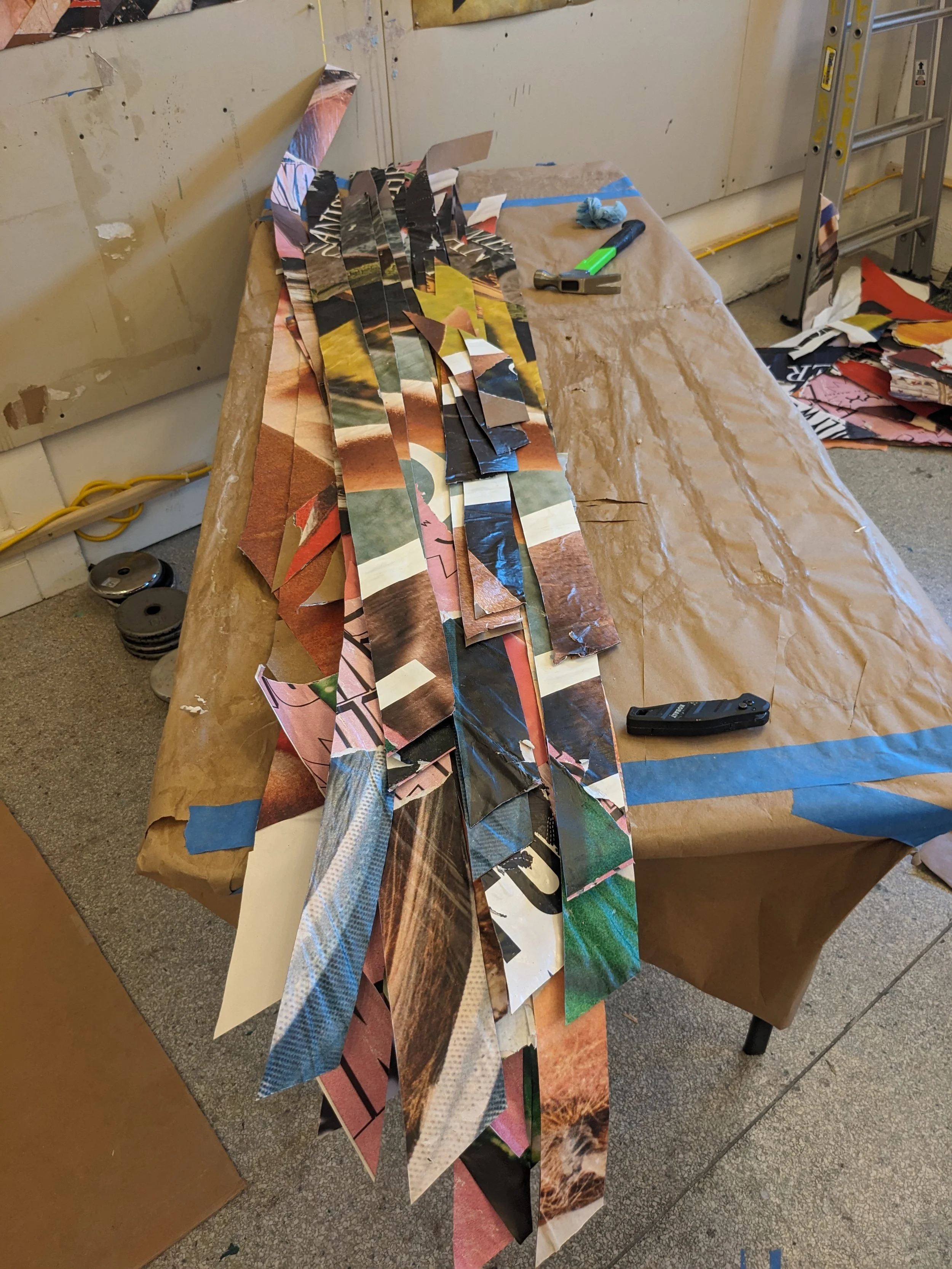
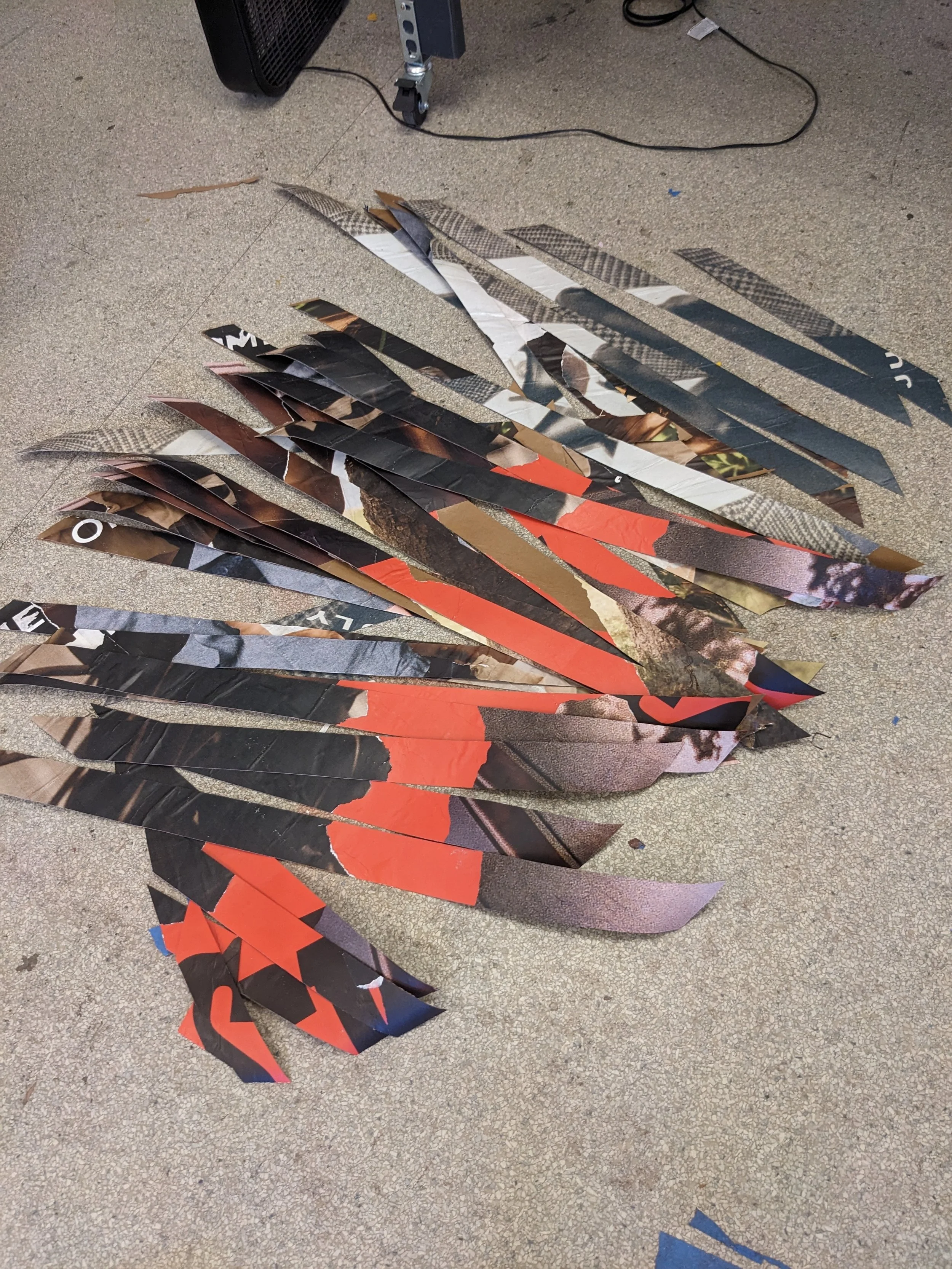
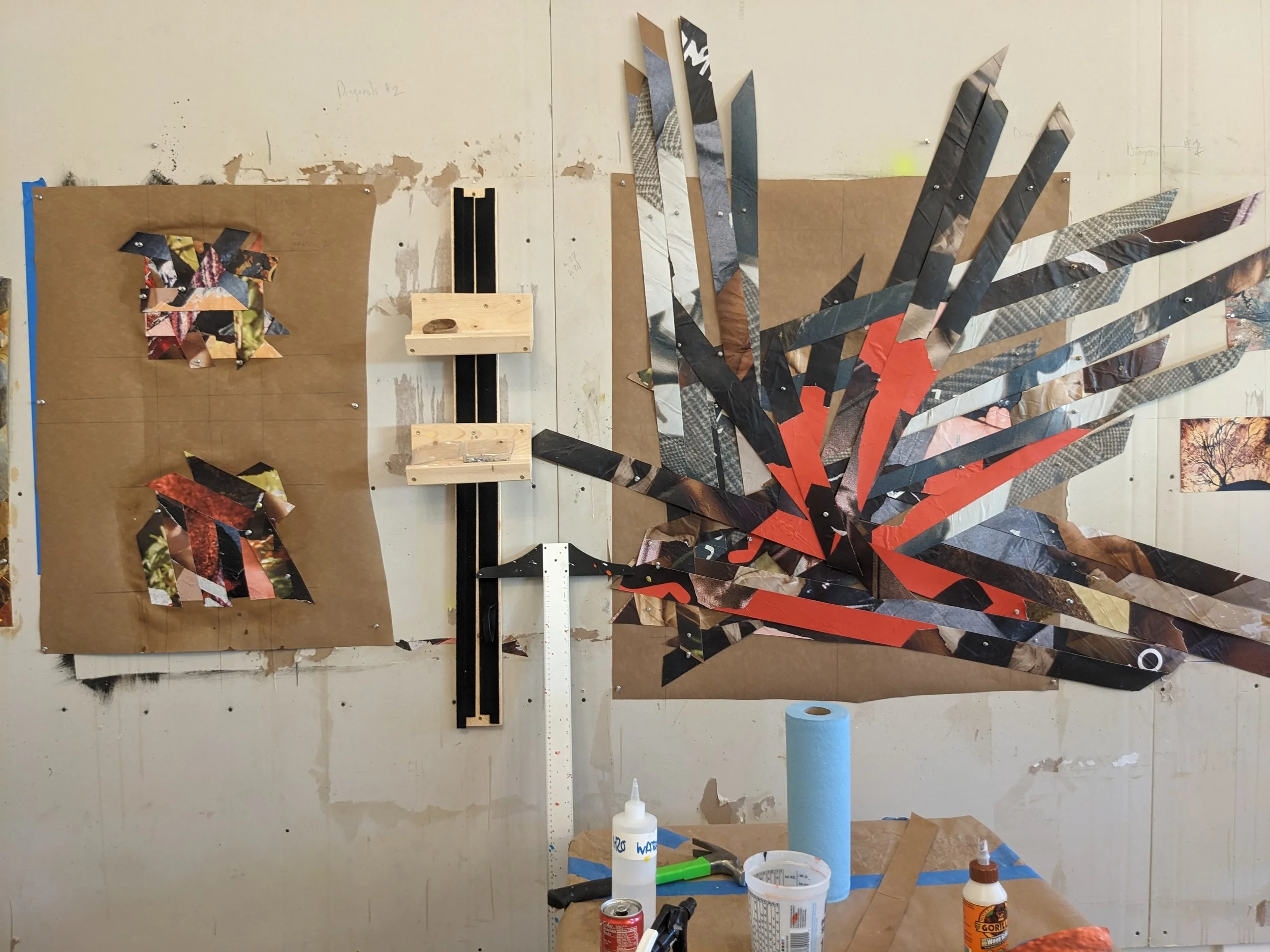
The whole thing gets cut diagonally into strips. The composition I just spent hours building is taken apart in a few minutes. The cut produces a new set of angled bands that didn't exist before. Each strip carries fragments of the old arrangement but no longer belongs to it.
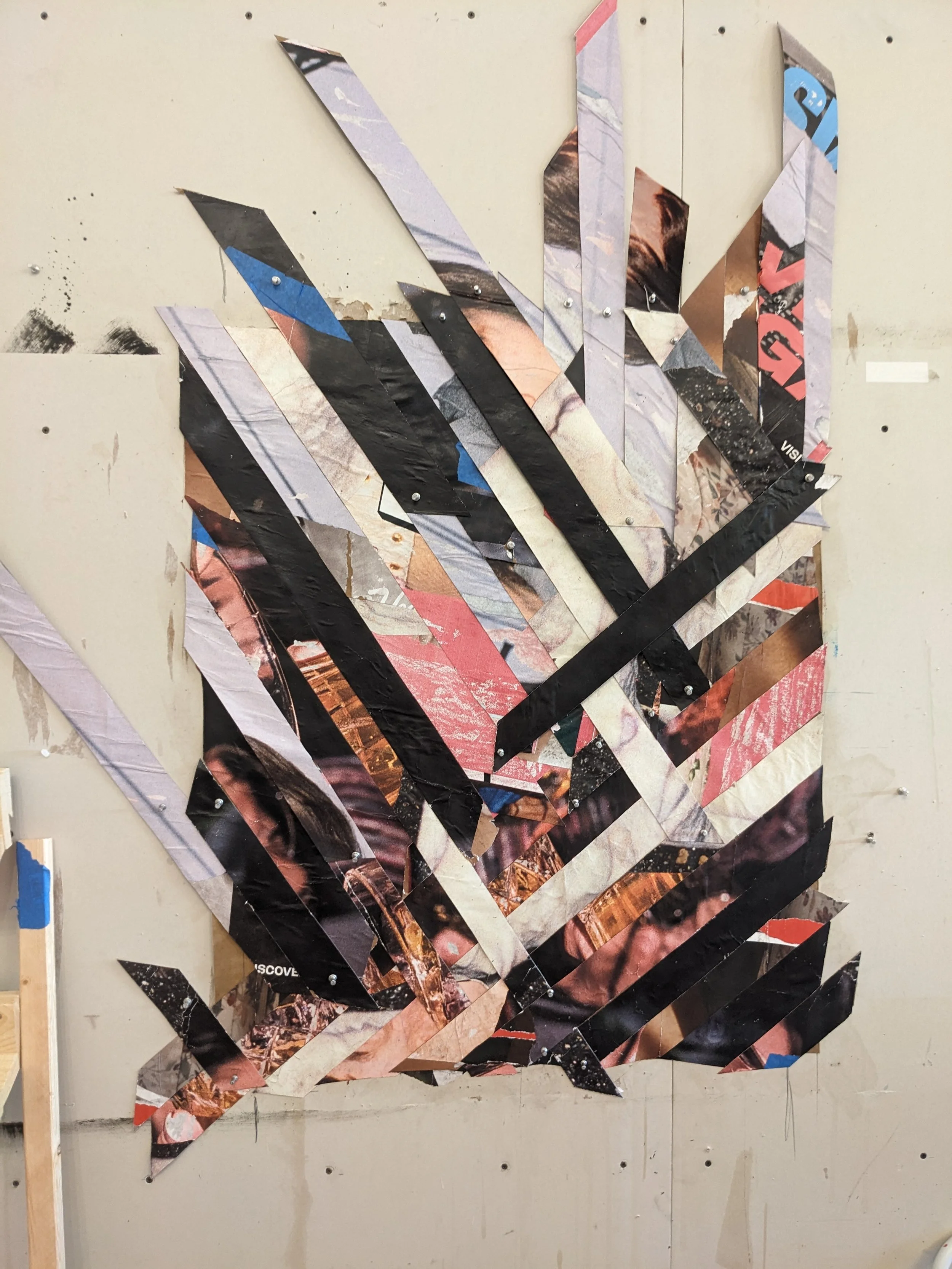
A fresh sheet of craft paper. A new ground for what comes next. The strips are laid across the new panel and pinned in place with push pins. This is where the work shifts. I'm not directing anymore — I'm responding. The strips suggest their own alignments, their own collisions. I move them, rotate them, flip them, shift them a quarter inch and everything changes. This stage can take days. It's done when it's done.
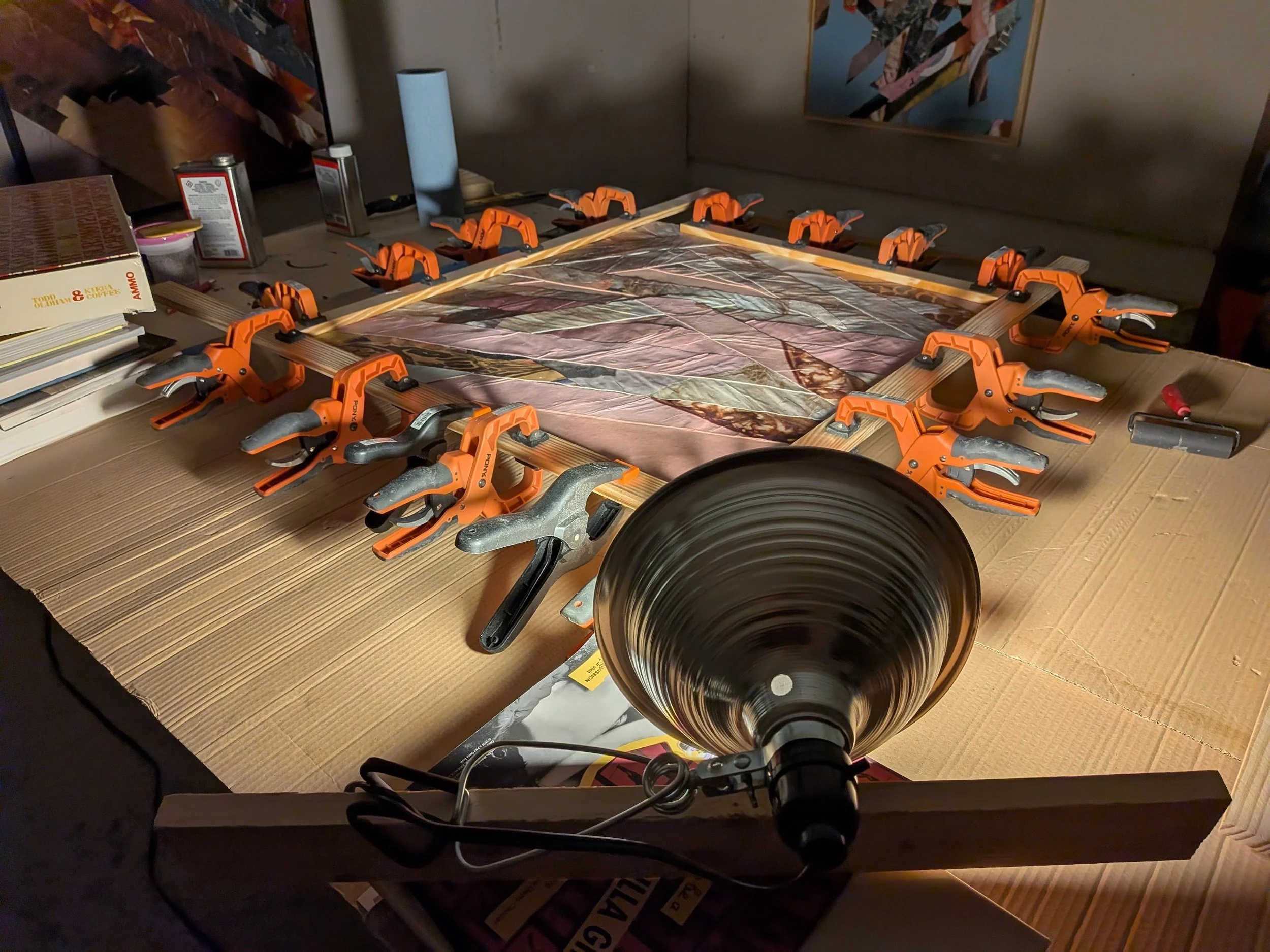
The strips are glued down. The composition is now permanent.
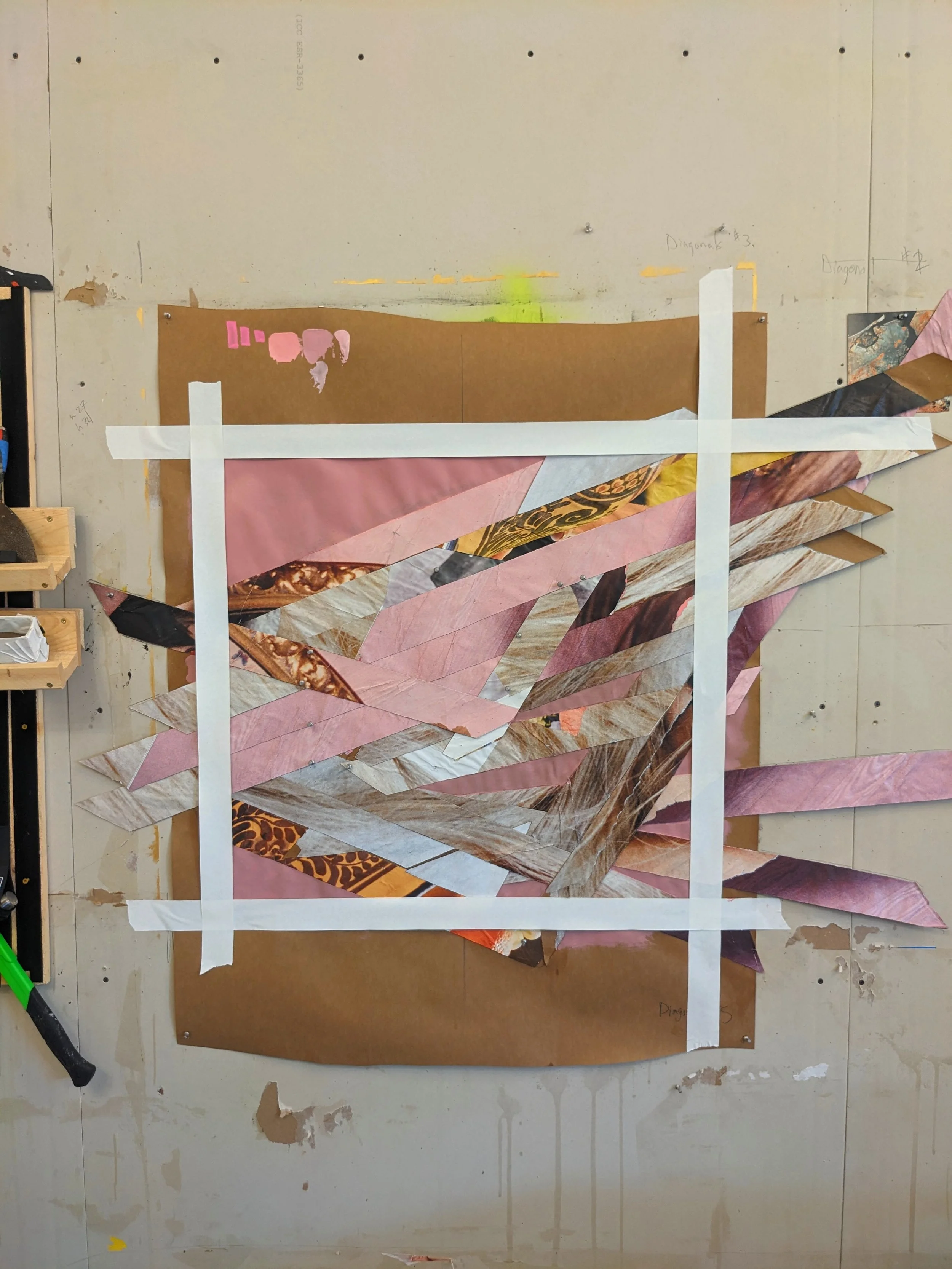
Painted fields are added — acrylic on the exposed craft paper between and around the strips. The paint isn't decoration. It gives the composition weight and breathing room. It stabilizes what emerged from the cut and the recomposition. The color choices come from the material itself — what's already in the collage suggests what the painted areas need to be.
Once the composition is glued and painted, the final crop sets the boundaries. The piece is cut to its final dimensions and mounted to a rigid panel. What started as paper pasted to a utility box is now something else entirely. But it's still paper.